What Makes a Perfume Last?
You spray your favourite perfume in the morning.
It smells incredible.
A few hours later, you check your wrist. Nothing. So you spray again. And again. And eventually you start wondering:
“Why doesn't my perfume last?”
The answer isn't always that you bought the "wrong" fragrance.
Perfume longevity depends on a combination of the formula, ingredients, concentration, skin, environment and how you apply it.
Some fragrances naturally last for many hours. Others are intentionally designed to be lighter and disappear sooner. Understanding the difference can help you choose better — and get more out of the perfumes you already own.
What Does "Long-Lasting Perfume" Actually Mean?
A long-lasting perfume is simply a fragrance that remains perceptible for an extended period after application.
But longevity is personal.
You might stop noticing your perfume after four hours while someone else can still smell it. This can happen because of olfactory fatigue, sometimes called nose blindness.
Your brain can become accustomed to a smell that has been continuously present, making you less aware of it even though other people may still detect it. Before deciding that your perfume has completely disappeared, ask someone nearby. You may be surprised.
The Difference Between Longevity, Projection and Sillage
These three terms describe completely different aspects of fragrance performance:
Longevity
How long the fragrance remains detectable on skin or fabric from initial spray to final trace.
Projection
How far the fragrance radiates outward from your skin into the surrounding space.
Sillage
The scented wake or vapor trail that lingers in the air behind you as you move.
A fragrance can possess:
- High longevity + low projection: An intimate skin scent that endures all night.
- High projection + moderate longevity: A vibrant opening burst that settles down quickly.
- Moderate longevity + noticeable sillage: A diffusive aroma that leaves an unmistakable trail.
So when someone says "this perfume lasts forever," they're talking about one aspect of performance — not necessarily the entire fragrance experience.
Which Fragrance Notes Last the Longest?
Certain types of fragrance materials have larger, heavier molecular weights that are less volatile, contributing to longer-lasting compositions:
Precious Woods
Heavier resins and dense grain structures that cling stubbornly to epidermal oils.
Amber & Resins
Viscous tree saps and warm balsamic accords with exceptional fixation capabilities.
Earthy Roots & Leaves
Deep botanical fixatives that ground the fragrance through hours of wear.
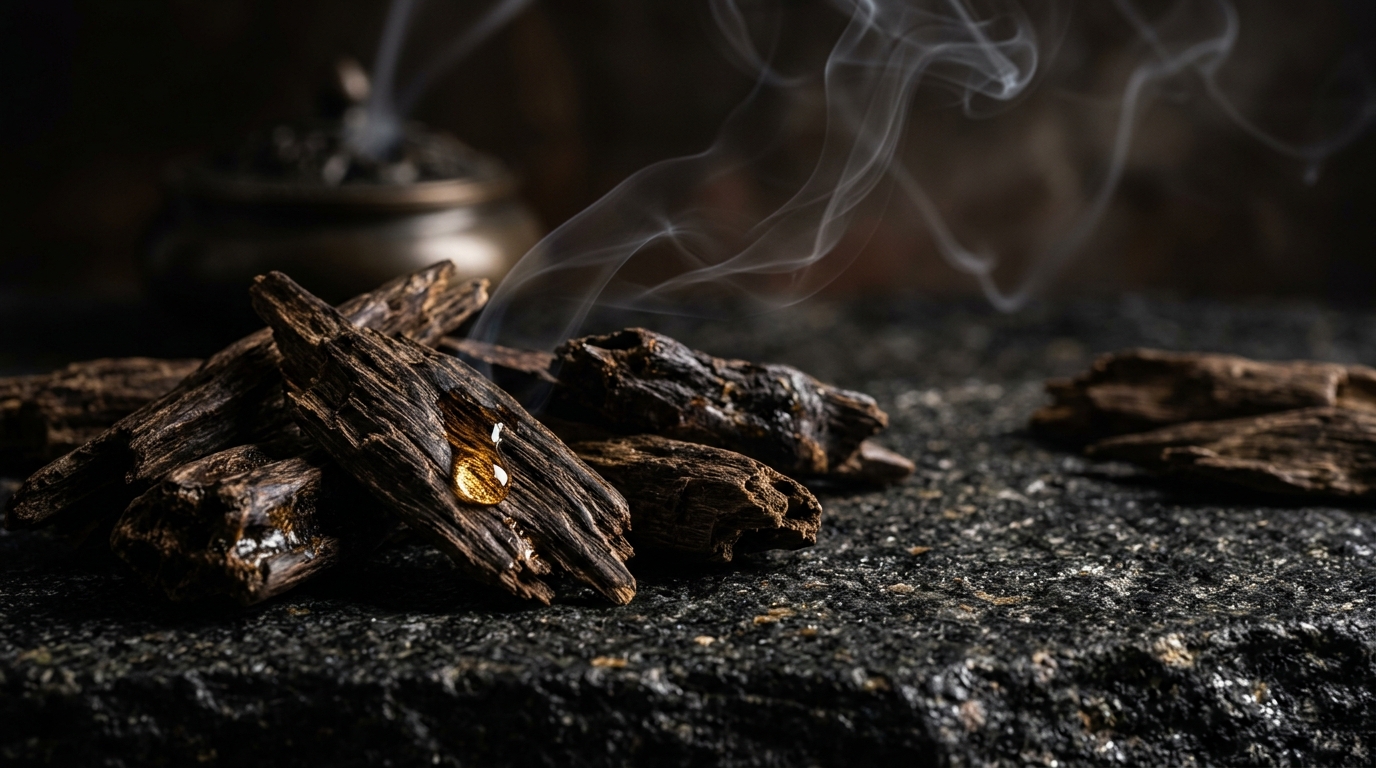
Oud & Dark Accords
Naturally infected agarwood heartwood boasting some of perfumery's longest retention.
Sensual Musks
Large-molecule fixatives that fuse intimately with human skin chemistry.
Warm Gourmand Base
Slow-evaporating crystalline vanillin and coumarin base foundations.
By comparison, fresh citrus materials such as lemon, bergamot, and grapefruit are highly volatile molecules that evaporate rapidly. This is why perfumes are structured with:
Fresh opening (Top Notes) → Richer heart (Middle Notes) → Deeper base (Fixative Foundation)
The brighter materials create the first impression; the deeper materials carry the fragrance into the later stages.
Does Eau de Parfum Last Longer?
Often, but not automatically.
Eau de Parfum generally contains a higher proportion of fragrance concentrate (typically 15–20%) than Eau de Toilette (5–15%), but concentration alone doesn't guarantee longevity.
- The formula matters.
- The ingredients matter.
- Your skin matters.
- The environment matters.
For example, an Eau de Toilette built around persistent woody, amber and musky materials can outlast an Eau de Parfum dominated by highly volatile fresh citrus notes. That's why choosing a fragrance based only on the letters EDP isn't enough.
For a detailed breakdown, read our comprehensive guide: What Is Eau de Parfum? EDP vs EDT vs Parfum, Explained.
Why Does Perfume Last Longer on Some People?
Skin chemistry can affect how a fragrance develops and how long it remains noticeable.
Factors such as skin moisture and lipid levels influence fragrance evaporation. Perfume molecules anchor more effectively to hydrated lipids; dry skin can cause volatile molecules to flash off much faster.
This is one reason moisturising before applying perfume can help. But there is no absolute formula: the same fragrance will interact uniquely with each wearer's body warmth, sebum production, and environment. That is part of what makes perfume personal.
How to Make Perfume Last Longer
You don't necessarily need to spray more perfume. How you apply it makes a far bigger difference:
Moisturise Your Skin First
Apply an unscented moisturiser or body lotion before your fragrance. Fragrance oils evaporate rapidly from dehydrated skin, while moisturised skin provides lipid anchors for perfume molecules to hold onto.
Apply to Pulse Points
Focus on the wrists, base of the neck, behind the earlobes, and inner elbows. These areas naturally radiate gentle body heat, steadily diffusing the fragrance throughout the day without overwhelming.
Don't Rub Your Wrists Together
Rubbing creates friction and premature heat that breaks down top notes and distorts the delicate olfactory pyramid. Spray cleanly and let the fragrance settle and dry naturally on the skin.
Apply to Clothing Carefully
Fabric fibers retain perfume molecules far longer than warm skin can. A mist on wool, cotton, or jacket lapels can extend your trail for days. Always test on an inconspicuous seam first to prevent staining delicate silks or light linen.
Don't Overapply — Aim for Presence
More sprays do not equal better longevity; they simply trigger immediate olfactory fatigue in yourself and everyone in the room. A few well-placed sprays create an intriguing aura rather than an oppressive cloud.
Does Vaseline or Hair Spraying Make Perfume Last Longer?
Does Vaseline Work?
You've probably seen this internet hack: apply Vaseline → spray perfume → supposedly lasts 24 hours.
The theory is that petroleum jelly acts as an occlusive barrier that traps evaporation. However, you don't need to turn your morning routine into a greasy science experiment. A high-quality, unscented moisturiser provides proper hydration without feeling heavy or altering the scent's diffusion.
Does Hair Hold Fragrance Longer?
Hair is porous and doesn't produce heat or sebum at the same rate as skin, making it an excellent scent carrier.
However, traditional fine fragrances contain 70–80% alcohol, which can dry out hair fibers over time. If you want to scent your hair, mist your hairbrush and let the alcohol evaporate for ten seconds before brushing, or use dedicated hair mists formulated with nourishing oils.
Temperature and Humidity Matter
Climate plays a decisive role in how fragrance behaves:
Warm Weather: Heat accelerates molecular evaporation, causing top and heart notes to project quickly and intensely. Fresh citrus, aromatic, and aquatic scents thrive here.
Cool Weather: Cold air slows molecular volatilization, keeping fragrances closer to the body. Heavier amber, spicy, gourmand, and woody extraits feel comforting and luxurious in the cold.
Humidity: Moisture in the air holds fragrance vapor longer, making scents feel fuller and more diffusive. In arid conditions, fragrances can flash off skin with surprising speed.
Why Can't I Smell My Perfume Anymore?
This is the classic paradox of perfumery: olfactory fatigue (nose blindness).
The human olfactory system is designed by evolution to alert you to changes in your environment — like smoke or food. When exposed to a continuous, non-threatening aroma, your brain down-regulates the signals so it can detect new scents.
Just because you cannot smell your perfume at 3:00 PM does not mean others cannot. Avoid respraying impulsively throughout the day.
Is Expensive Perfume More Long-Lasting?
Not necessarily.
Price is not a reliable measurement of longevity.
A luxury perfume may cost more because of brand heritage, bespoke crystal flacons, global marketing, or limited production runs. Meanwhile, an affordable fragrance formulated with synthetic amber or musk bases can easily last 10 hours.
If performance is your goal, look at the actual notes and formulation rather than assuming the price tag guarantees duration. Explore our guide on perfume price explained to see where your money actually goes.
What Should You Look For in a Long-Lasting Perfume?
If lasting presence is your main priority, seek fragrances anchored in persistent olfactory families:
- Woody: Mysore sandalwood, Virginian cedar, and Haitian vetiver.
- Amber: Warm, balsamic benzoin, labdanum, and golden resins.
- Gourmand: Rich Bourbon vanilla, caramelized sugar, and tonka bean.
- Musk: Soft, clean, and sensual second-skin synthetic musks.
- Oud: Deep, dark agarwood accords with extraordinary staying power.
Remember: longevity should serve the scent, not replace it. A brilliant citrus EDC that lasts 4 hours on a scorching summer afternoon is often far more pleasurable than a heavy oud that clings for 14 hours in the heat.
The Best Way to Test Perfume Longevity
Don't rely on promotional claims of "12+ hours guaranteed." Test it on your own skin across a real day:
The Opening
Notice the volatile top notes. Are they bright, invigorating, or harsh?
The Heart Blooms
The top notes soften into the heart florals, spices, and aromatics. Notice the projection distance.
The Mid-Day Transition
Is the fragrance still radiating comfortably, or has it pulled close to the skin?
The Base Notes Emerge
Check your wrist. The foundational woods, musks, and resins should now be softly projecting.
The Lingering Trail
Smell your skin and clothes. What pleasant memories or warmth remain?
Long-Lasting Perfume Doesn't Mean Loud Perfume
This distinction deserves repeating:
There is a vast difference between: "I want people across the room to smell me" and "I want my fragrance to still be there tonight."
The first is about loud projection. The second is about refined longevity. A sophisticated haute parfumerie creation can stay close to your personal space while continuing to subtly evolve for 10 hours.
Building a Fragrance Wardrobe Around Performance
Rather than owning only powerhouse fragrances, build flexibility into your rotation:
The Fresh Fragrance
3–5 hours of sparkling citrus or green aromatics for workouts, morning errands, and summer heat.
The Everyday Fragrance
6–8 hours of refined florals, woods, or aromatic fougères for office meetings and regular routines.
The Evening Fragrance
8–10 hours of warm amber, vanilla, or spices for dinner dates, gallery openings, and night events.
The Statement Fragrance
10–14 hours of pure extrait, smoky resins, and oud for formal galas and unforgettable evenings.
The SOVRÉ Perspective
At SOVRÉ, we don't believe the goal of perfume is to make your presence impossible to ignore. The goal is to make your presence memorable.
Longevity matters. Projection matters. Sillage matters. But they're only part of the story. A fragrance should evolve. It should interact with your skin. It should fit the atmosphere.
“The best long-lasting perfume isn't simply the one you can smell the next morning. It's the one that stays in someone's memory.”
Frequently Asked Questions
There isn't one universally longest-lasting perfume. Longevity depends on the fragrance's formulation, materials, concentration, skin and environment.
Apply fragrance to moisturised skin, use appropriate application points, avoid rubbing it into the skin and consider carefully applying it to clothing where suitable.
EDP often provides longer wear, but this isn't guaranteed. Ingredients and formulation can make a major difference.
It may be influenced by your skin, the fragrance formula, temperature, humidity or olfactory fatigue. You may also still be wearing the fragrance even though you have stopped noticing it.
Moisturised skin can provide a better surface for fragrance and may help reduce the perception of rapid evaporation compared with very dry skin.
You can, but test carefully first. Some fragrances may stain or affect delicate fabrics.
No. Projection and longevity are different characteristics. A fragrance can project strongly but fade relatively quickly, or remain for a long time while staying close to the skin.
Final Thoughts
If you want your perfume to last longer, don't immediately reach for more sprays.
Understand the fragrance. Understand your skin. Understand your environment. And give the perfume time to develop.
Because fragrance isn't measured only by how long it stays on your wrist. It's measured by the experience it creates while it's there.
Wear it well. Let it evolve. Leave an impression.
Discover Your Signature
Explore SOVRÉ's collection and find a fragrance that doesn't just last — one that becomes part of your presence.