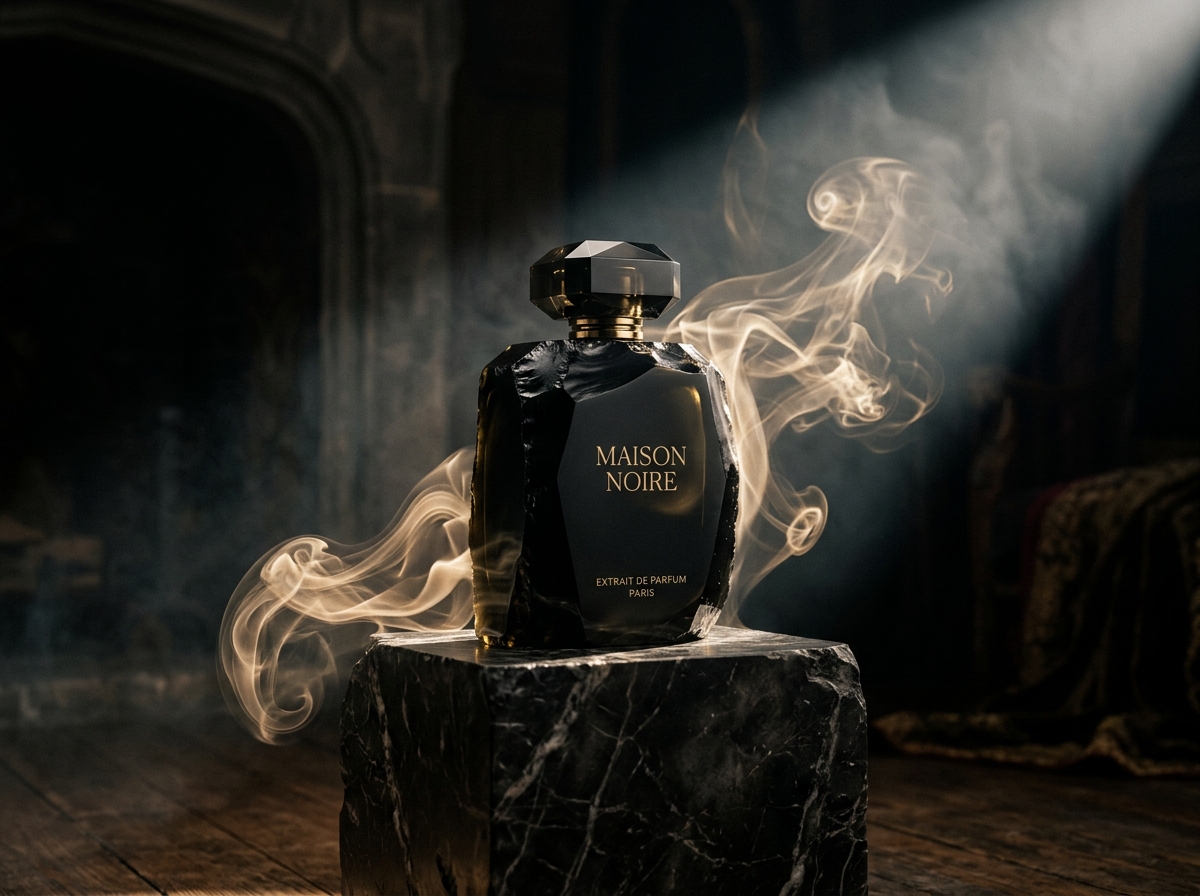
Why Does Perfume Cost So Much?
Walk into two fragrance stores and you can find two bottles that look remarkably similar in size — yet one costs ₹800 while another costs ₹15,000 or more.
So what creates the difference?
- Is expensive perfume actually better?
- Are you paying for the ingredients?
- The brand?
- The bottle?
- The concentration?
- Or simply the name printed on the box?
The answer is: a little bit of everything.
Perfume pricing is shaped by the fragrance itself, but also by everything surrounding it — from raw materials and formulation to packaging, distribution, marketing and brand positioning.
Understanding that makes it much easier to decide whether a perfume is actually worth its price.
Perfume Price in India: A Simple Guide
There is no universal price ladder that applies to every perfume.
However, the Indian fragrance market broadly contains everything from inexpensive body sprays and entry-level fragrances to designer, niche and ultra-luxury perfumes.
As a rough shopping framework, you might encounter:
| Approx. Price Range | What You'll Commonly Find |
|---|---|
| Under ₹1,000 | Body sprays, mists and entry-level mass fragrances |
| ₹1,000 – ₹3,000 | Budget and accessible EDP / EDT options |
| ₹3,000 – ₹8,000 | Premium and many designer fragrances |
| ₹8,000 – ₹15,000 | Luxury designer and premium fragrance territory |
| ₹15,000+ | Many niche, artisanal extraits and high-luxury fragrances |
These aren't strict quality categories. Current Indian fragrance-market guides show significant overlap between price tiers, with the exact price depending on the brand, size, concentration and sales channel.
A ₹2,000 perfume isn't automatically "cheap." A ₹15,000 perfume isn't automatically "better." Price is a clue, not a quality score.
What Actually Determines Perfume Price?
There are several major factors behind the price of a fragrance:
1. The Ingredients
Natural materials like Grasse rose, Mysore sandalwood, or natural agarwood require extensive cultivation, specialist sourcing, and delicate extraction. However, expensive ingredients alone don't make a great perfume — the alchemy of composition is what matters.
2. Concentration
From EDC and EDT to EDP and pure Parfum / Extrait. More concentrated formats require a greater ratio of aromatic oils. Explore our in-depth Eau de Parfum concentration guide for full details.
3. The Perfumer & Formula
Developing an original olfactive structure takes master perfumers months or years and dozens of trials. The raw ingredients provide the vocabulary; the master formula creates the language.
4. The Bottle & Packaging
Heavy bespoke crystal flacons, polished metal collars, custom magnetic caps, and presentation cases contribute substantially to manufacturing costs compared to generic stock bottles.
5. Branding & Marketing
Global campaigns with celebrity ambassadors, cinematic film productions, and retail flagships add enormous overhead. You are partly paying for the brand's cultural ecosystem.
6. Retail & Distribution
The path from atelier to distributor, luxury department store, and customer adds margins at each step. International import duties, shipping logistics, and taxes also compound the final price.
Why Two Perfumes With the Same Size Can Cost Completely Different Amounts
Imagine two 100ml bottles.
Both contain perfume. Both look premium. One costs ₹1,500. The other costs ₹12,000.
That doesn't necessarily mean one contains eight times as much "quality."
The price difference reflects:
- Ingredients
- Concentration
- Formula development
- Packaging
- Brand reputation
- Marketing
- Retail margins
- Import costs
- Distribution
- Exclusivity
The economics of perfume are therefore much more complicated than simply: "This perfume costs more because it smells better."
Does Expensive Perfume Last Longer?
Not necessarily.
This is one of the biggest myths in fragrance.
A ₹15,000 perfume can disappear from your skin sooner than a ₹3,000 perfume.
Why? Because longevity isn't determined by price. It is influenced by:
- Formula
- Ingredients
- Concentration
- Skin chemistry
- Temperature
- Humidity
- Application
- Fragrance structure
A fragrance built around woods, musk, amber or other persistent materials may behave very differently from a bright citrus composition.
So if someone tells you: "Expensive perfume always lasts longer," don't automatically believe them.
Does Expensive Mean Luxury?
Here's where things get interesting.
The word luxury isn't simply a measurement of price.
A fragrance can feel luxurious because of:
- Its materials
- Its craftsmanship
- Its history
- Its presentation
- Its exclusivity
- Its storytelling
- Its rarity
- Its overall experience
A fragrance can also be expensive primarily because of branding and distribution.
There is no universal formula that says: ₹10,000 = luxury or ₹2,000 = low quality. Luxury is partly about the product and partly about the experience surrounding it.
What About Niche Perfumes?
Niche fragrance houses often operate differently from mass-market designer brands.
Many focus heavily on fragrance itself and may produce smaller collections or more specialized compositions. Some niche fragrances use unusual materials, distinctive concepts or less conventional structures.
That can make them more expensive. But again:
Niche does not automatically mean superior. You can find incredible designer fragrances and disappointing niche fragrances. Explore our guide to perfume brands worth knowing for a complete breakdown.
How Much Should You Spend on Perfume?
There isn't a single correct number. Instead, think about value.
If you wear perfume occasionally, spending ₹15,000 on a bottle may not make sense for you. If fragrance is an important part of your daily identity, a premium bottle may provide significant value over time.
The better question is:
“How much value will this fragrance give me every time I wear it?”
The Cost Per Wear Equation
This leads to a useful economic concept: Cost Per Wear.
The cheaper bottle has a lower purchase price, but the more expensive bottle actually costs less per use. Cost-per-wear isn't a perfect measurement, but it can make perfume pricing much easier to evaluate rationally.
Is Cheap Perfume Always Bad?
Absolutely not.
Affordable fragrances can be excellent.
Modern perfumery has access to an enormous range of synthetic aroma materials, manufacturing techniques and fragrance expertise. A lower price can simply mean that the company operates at a different scale or spends less on packaging, advertising and distribution.
Some affordable fragrances can offer remarkable value. The trick is to judge the actual fragrance, rather than assuming its quality from its price tag.
Is Expensive Perfume Always Worth It?
Again, no.
A high price can be justified when you're getting something you genuinely value:
- Exceptional composition
- Interesting materials
- Beautiful craftsmanship
- Distinctive character
- Strong artistic identity
- Excellent overall experience
But sometimes you're paying heavily for packaging, exclusivity, brand recognition, advertising, or retail positioning. Whether that is "worth it" depends on what you're buying the perfume for.
How to Tell If a Perfume Is Worth Its Price
Before buying, ask yourself five questions:
Do I love the fragrance?
The most important question. If you don't enjoy the scent, nothing else matters.
Does it perform well enough for me?
You don't necessarily need twelve-hour longevity. You need performance appropriate for how and where you wear it.
Do I enjoy the dry-down?
Never judge a fragrance entirely from its opening. The base notes are what will linger on your skin all day.
Am I paying for the perfume or mostly the packaging?
Beautiful packaging is great. Just be honest with yourself about what you are assigning value to.
Would I still buy it without the hype?
Imagine the bottle had no celebrity campaign, no viral social media attention, and no famous logo. Would you still want it? If the answer is yes, you've found something worth buying.
A Smarter Way to Shop for Perfume
Instead of walking into a store with a fixed idea of what an expensive perfume should smell like, try this sequence:
- Start with the fragrance family: Fresh? Floral? Woody? Amber? Gourmand?
- Choose the format: EDT? EDP? Parfum?
- Test it: Don't rush. Spray on skin and wait for development.
- Check the price: Only after you know you actually like it.
- Compare alternatives: Look at similar olfactory profiles from different houses.
You might discover that the experience you want exists at several different price points. That's where fragrance shopping gets genuinely rewarding.
The SOVRÉ Perspective
At SOVRÉ, we believe perfume should be evaluated by what it gives you, not simply what it costs.
A fragrance isn't valuable because the number on the price tag is large. And an affordable fragrance isn't automatically lacking.
The real value lives somewhere between the composition, the craftsmanship, the experience and the way the fragrance becomes part of your life.
“The right fragrance is the one whose value you can feel every time you wear it. Because luxury isn't always about spending more. Sometimes, it's about choosing better.”
Frequently Asked Questions
Perfume prices can reflect ingredients, formulation, concentration, packaging, branding, marketing, distribution, retail margins, taxes and import costs.
There is no single good price. Affordable, premium, designer and niche fragrances can all offer value depending on their quality and how often you use them.
Not automatically. Price and quality are related in some cases, but price can also reflect branding, packaging, distribution and exclusivity.
Often, EDP versions can cost more than EDT versions of the same fragrance, but pricing depends on the specific brand, formulation, bottle size and market.
Niche perfumes can cost more because of factors such as specialized compositions, materials, smaller production, distribution and brand positioning. However, not every niche fragrance is expensive and price isn't a guaranteed indicator of quality.
Choose fragrances you genuinely enjoy, test them before purchasing, compare prices across legitimate retailers and consider cost per wear rather than looking only at the initial price.
Final Thoughts
Perfume price tells you what you're being charged. It doesn't automatically tell you what the perfume is worth.
So the next time you see a ₹15,000 bottle sitting beside a ₹1,500 bottle, don't immediately assume the expensive one is ten times better.
Smell them. Study them. Let them develop. Then decide.
Because the most valuable perfume isn't necessarily the most expensive one. It's the one you keep reaching for.
Find Your Worth Wearing
Discover SOVRÉ — where fragrance is measured not by the price of presence, but by the presence it leaves behind.